ZOOLOGICAL SCIENCE 28: 758–763 (2011)
Evidence for True Fall-mating in Japanese Newt Cynops pyrrhogaster
Shigeharu Akiyama, Yasuhiro Iwao and Ikuo Miura
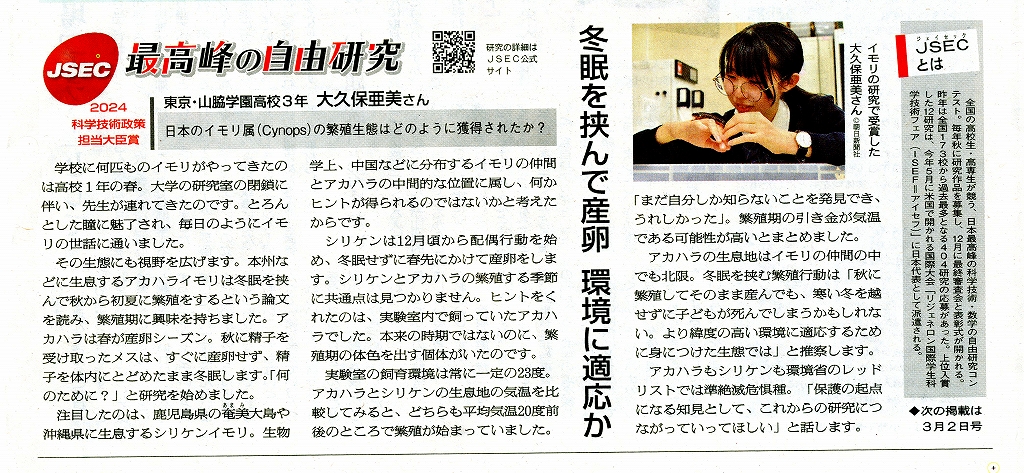
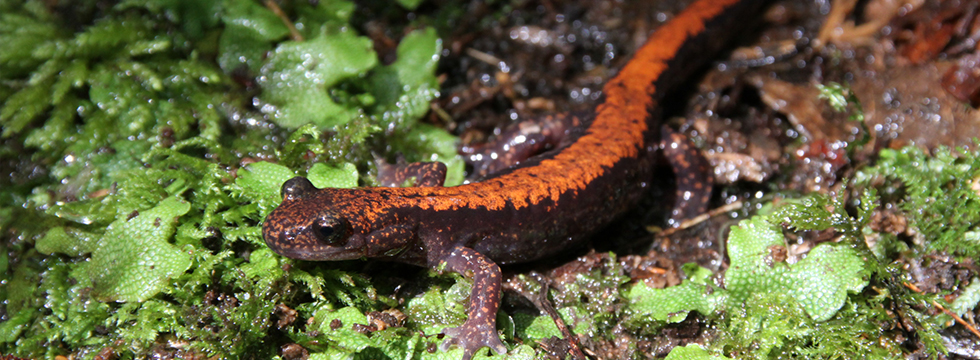
The mating season of Japanese newt Cynops pyrrhogaster is generally thought to occur once a year in spring to early summer, during the months of April to June, as in many other Japanese amphibians. However, in fall, from September to October, we often observed breeding colored males demonstrating a mating behavior with females in the field. In this study, in order to identify their true mating season, we anatomically and histologically investigated the annual maturation cycle of gonads and reproductive organs, including cloacal spermathecae in females, and, using a molecular marker, identified the seasonal origins of sperm, which are released in spring to perform insemination. We found that, in fall, ovaries are somewhat immature, while the testes were mature and the sperm already stored in the deferent ducts. Females stored a significant amount of sperm in around 80% of the spermatechae examined in October and 100% in December. When artificially ovulated in March before contact with male partners after hibernation, the females spawned fertilized eggs and these developed normally. Finally, we identified heterozygous genotypes of the visual pigment gene for the two different population types in the embryos, which were derived from a female who established contact with males of the same population in fall and then switched to males from another population until oviposition in spring. We therefore, conclude that the true mating season of this species occurs from fall to early summer, interrupted only by winter, and lasts six months longer (from October to June) than generally believed.
Key words: fall mating, newt, spermathecae, sperm, maturation