
1. What Is an Education That Enables Students to Continue Holding Questions?
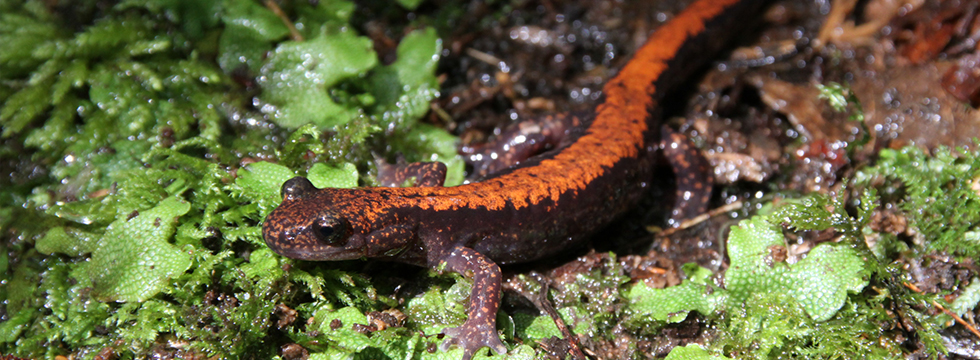
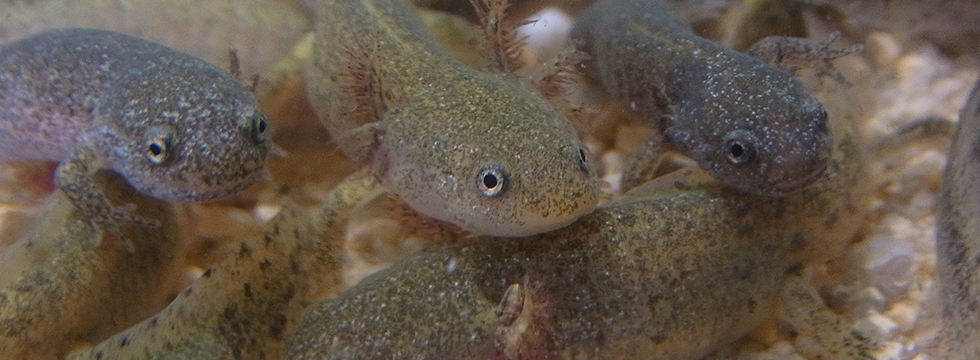
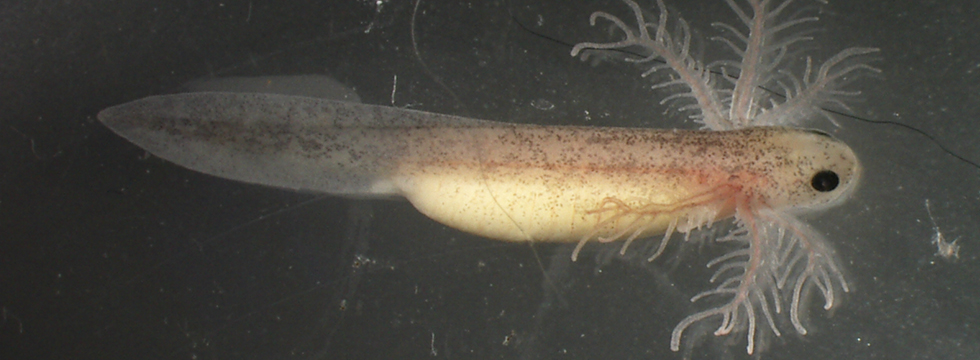
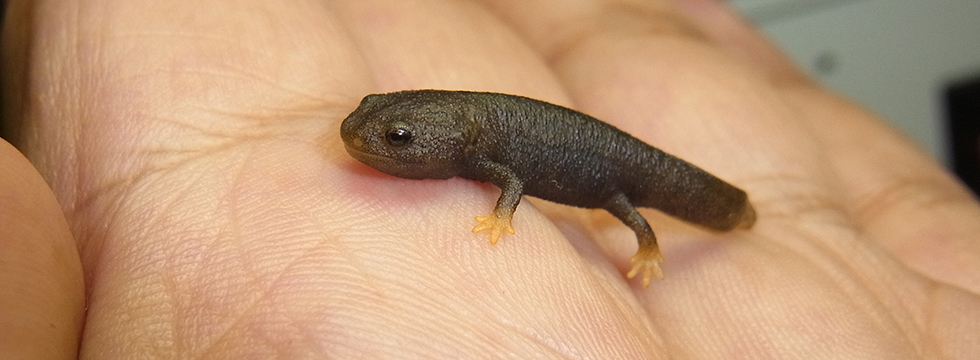
Having spent many years in the field of high school education, I have continued to ask myself how, as a teacher, I should relate to my students. In that process, I have worked on research into the reproduction of urodele amphibians, such as salamanders and newts, and on developing that research into teaching materials.
For me, research was never something to be pursued only as a specialist. It was research carried out within the school life I shared with students as a high school science teacher. It had to be something through which I could share curiosity with students, and something that was within their reach. This conviction was the starting point of both my life in research and my practice as an educator.
In the field of education, knowledge is often placed first. There are textbooks, units, objectives to be achieved, and evaluations. Students are expected to learn in accordance with these structures, and teachers are expected to teach them efficiently. Of course, knowledge is indispensable. Without basic knowledge, scientific thinking cannot be established. Yet no matter how much knowledge students accumulate, that alone does not make them active subjects of learning.
A person does not truly begin to learn at the moment knowledge is given. Learning begins when a question arises within oneself, a question to which one does not yet know the answer. Why does this happen? How does such a phenomenon occur?
I myself have constantly asked the question, "For what purpose do human beings live?" In seeking an answer, I encountered the ideas of philosophers and psychologists, and among them, the words of Viktor Frankl.
Frankl, the author of Man's Search for Meaning, urges us to stop pressing life with questions such as "For what purpose do I live?" or "What is the meaning of life?" Instead, he tells us to reverse the direction of the question by 180 degrees. According to Frankl, we are not beings who question life about its meaning. Rather, we are beings who are questioned by life itself, every day and every hour, through concrete situations: "How will you live?" We have the responsibility to respond to that question not with words, but through our own concrete actions. This ability to respond to the situation is the essence of being human, and it is precisely what Frankl means by "responsibility."
This structure of "question and response" applies directly to the field of education as well. Students, too, only begin to receive objective knowledge as something that concerns them personally when they come to hold questions within themselves. At that moment, knowledge is transformed. It is no longer merely a collection of lifeless items to be memorized, but becomes an indispensable clue for approaching one's own question and for responding to the questions posed by life.
What matters in science education is by no means to make light of knowledge. Rather, it is how to create, within the minds of students, situations in which knowledge becomes urgently necessary. The time I have spent facing research has taught me the importance of this through my own experience.
The newts and salamanders I have studied do not speak answers according to my convenience. Even when I observe them, I do not understand them immediately. Only after raising them over a long period of time, recording them, watching the changes of the seasons, and continuing to follow the processes of development and reproduction does a small question finally begin to take shape.
Observation is not the act of controlling the object. It is the act of standing before the object and realizing the shallowness of one's own understanding. And even so, it means continuing to look. This experience also leads back to the starting point of education. Students, too, do not change according to the teacher's convenience. They do not immediately understand just because the teacher has given a good explanation. Nor do they immediately show motivation. Time is necessary. Waiting is required. Until a question begins to sprout within the student, the teacher must continue to prepare the conditions for it to emerge.
What I first worked on was not limited to the teaching of science as a subject. It also included my involvement with students in homeroom, sexuality education, class newsletters, and the practices that later led to the class titled "Life." In these practices, the issue was how to provide students with materials for thinking about their own way of living before transmitting knowledge to them.
Sexuality education is not simply education that provides knowledge about sex. It is an education in which people consider how to understand their own bodies, how to relate to others, and how to take responsibility for their own lives. In that sense, sexuality education, too, was an undertaking aimed at preparing the conditions in which students could continue to hold questions.
2. Changing a School by Listening to Voices
The philosophy of the Urodeles Research Institute did not begin as the dream of one person alone. Of course, there was a long personal history that led me there. There was my own path: writing class newsletters, working on sexuality education, thinking about life together with students, observing urodeles, and trying to create a place for research within the school. Yet that alone would not have been enough for this philosophy to take shape. At its root lies the experience of trying to renew education by listening to the voices of students, teachers, and parents.
In 1999, I was appointed leader of a school reform project team under the theme, "What Can Seishin Gakuen Do in the Year 2000?" In order to respond to that question, I was given the role of analyzing the present situation and proposing concrete directions for reform. It was the first whole-school survey in the history of Seishin Gakuen to analyze such a large amount of data. Until then, the school had never asked students or parents for their opinions in this way, nor had it allowed the education it was providing to be evaluated objectively.
This questionnaire was not simply a matter of asking everyone the same questions and analyzing the resulting data. It was designed with careful structure and consideration. We deliberately excluded second-year junior high school students and second-year senior high school students, as well as the parents of first- and second-year junior high school students and first- and second-year senior high school students. For parents, we sought opinions at the stage when their children were completing junior high school or senior high school. For students, we asked first-year junior high and first-year senior high students about their thoughts at the time of entrance, and third-year junior high and third-year senior high students about their thoughts at the milestone of graduation.
Through this questionnaire, we asked what students were satisfied with in school life and what they felt anxious about; where teachers found value in Seishin's education and where they felt its limits lay; and what parents expected of the school, what kinds of future paths they hoped for, and what kind of human formation they wished for their children. The responses included not only requests for better academic results and advancement to higher education, but also urgent voices rooted in every aspect of school life, including religious education, student guidance, sexuality education, school events, the educational environment, and what it meant to be a girls' school.
Among these responses, the gap in awareness surrounding sexuality education was especially suggestive for me. Many voices recognized the necessity of sexuality education itself. Yet there was a large divide between seeing it as an issue of student guidance and seeing it as an education that supports students' self-determination and way of life. Should sexuality education be positioned as guidance to prevent a decline in sexual morality? Or should it be positioned as an education through which students think about how to understand their own bodies, how to relate to others, and how to take responsibility for their own lives? This difference was not merely a difference in educational content. It was a difference in the very view of education: how the school understood the students as human beings.
What became especially clear to me was that the task of school reform could not be completed simply by creating new subjects or improving entrance examination results. In school, students face not only academic study, but also their own bodies, friendships, anxieties about the future, relationships with their families, and the question of how to live as women in society. Teachers, too, stood before that reality and sensed that conventional subject teaching and student guidance alone were not sufficient to respond to it.
The questionnaire was an attempt to make those voices visible as issues for the entire school. Through this work, I came to think that school reform does not mean imposing one person's ideals on a school. It begins with listening to the realities of students, the hopes of parents, the uncertainties of teachers, and the changes in society; reading the anxieties and urgent feelings that lie beneath them; and crystallizing them into curriculum and institutional structures. That was the starting point of reform.
The class titled "Life" was born out of this process. Until then, the practices I had carried out through class newsletters, sexuality education, and long homeroom sessions had been attempts to give students materials for thinking about how to live. But after the discussions on school reform in 1999, these practices could no longer remain the work of one homeroom teacher alone. As a school, we needed to position within the curriculum a place where students could think about their own lives, bodies, futures, and questions. This recognition led to the creation of the new subject.
In other words, the class "Life" was not a new subject that appeared suddenly. It was the educational practice of "questioning how to live," which had been built up through class newsletters, sexuality education, and long homeroom, reconsidered as an issue for the whole school through the school reform questionnaire and then positioned within the curriculum.
The aim was not to teach students the correct way to live. It was to prepare materials that would enable students themselves to think about their own bodies, their relationships with others, their futures, and their own lives. The experience of listening thoroughly to the voices of students, teachers, and parents, and of reconsidering the nature of the school from its foundations, led me to redefine who the true subject of education should be. This idea became the foundation of the philosophy that later led to the Life Science Course, SSH, science research projects, and eventually the Urodeles Research Institute.
Looking back from this point, I feel a strong sense of concern when I observe recent trends among private schools. Even today, there are schools that value their founding principles and traditions while responding to international perspectives and changes in the information society, and enriching the content of their education. Students who graduate from such schools will likely regard the school life they experienced as irreplaceable.
On the other hand, since the COVID-19 pandemic, more and more girls' schools have become coeducational. Of course, coeducation itself is not the problem. The problem is when schools change only their external form too easily because of difficulties in recruiting students, instead of sincerely renewing the content of education by listening to the voices of students and parents, conducting objective surveys, analyzing the trends of the times, and then reconsidering what the school should be. In some cases, schools move toward coeducation without sufficiently examining the culture they have cultivated as girls' schools. In other cases, they read only the surface trends of contemporary society and establish labels such as "advanced university entrance course," "medical school entrance course," or "affiliated university entrance course," without fully considering the actual condition of the school. In such cases, I feel that decisions based on short-term entrance examination culture and the convenience of the school are still being made, even in the present age.
That is why we must think sincerely about the present state of education, stop, and ask again. For whom does education exist? If adults are afraid to listen to voices objectively, and if education is advanced only according to adult convenience, there can be no future in which students become the true subjects of learning. The time I have spent facing both research and the educational field has taught me this.
3. Turning Questions into Institutions
From the Class "Life" to the Life Science Course
In order not to let the "questions" that arise from within students remain merely temporary, but to raise them into sustained learning, a strong institutional structure is necessary to support them. The urgent realities of students made visible through the school reform of 1999, and the perspective that emerged from the class "Life," later led to the establishment of the Life Science Course and, further, to a distinctive educational program within the Ministry of Education, Culture, Sports, Science and Technology's Super Science High School program, hereafter referred to as SSH.
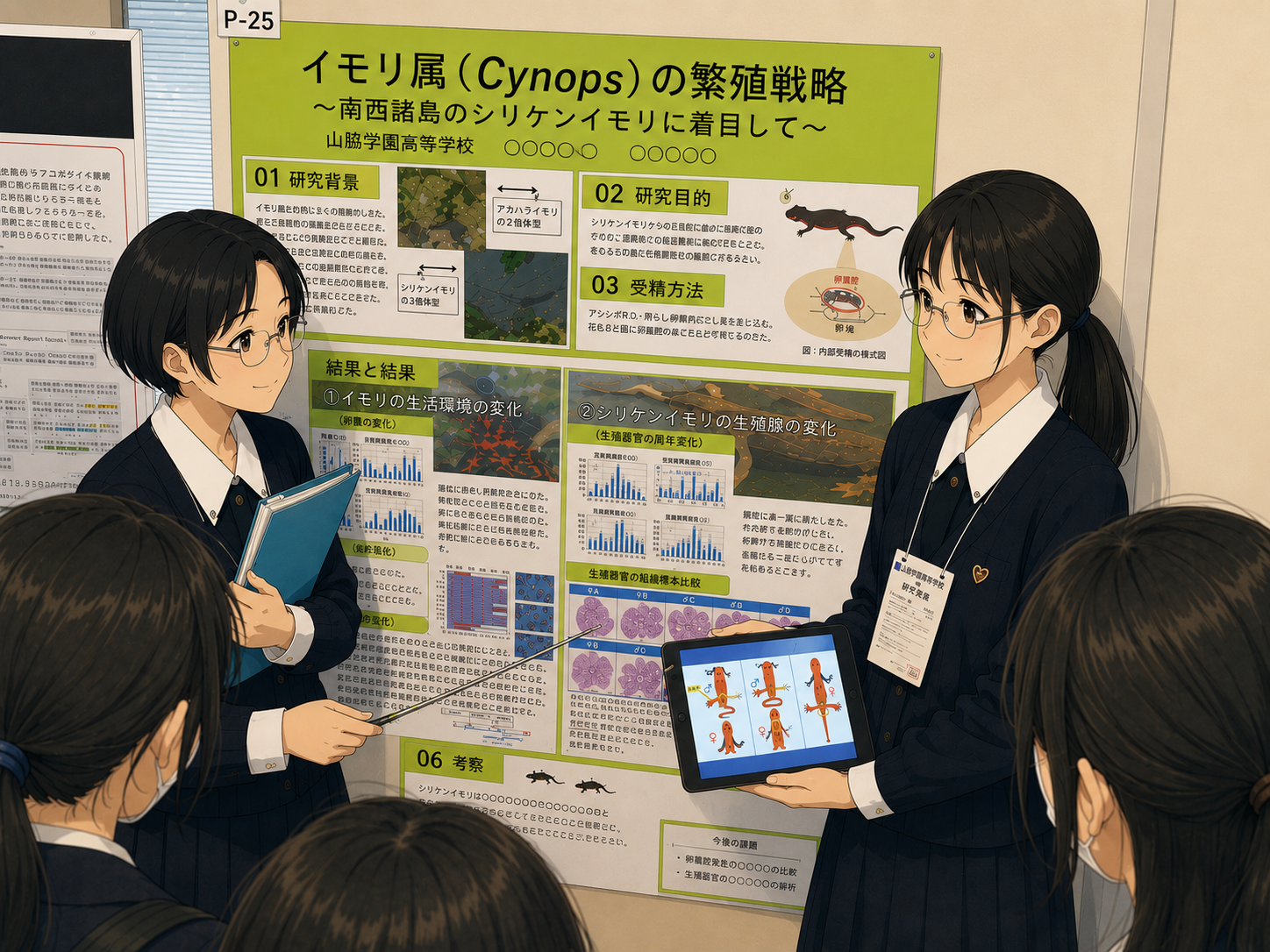
In particular, in taking on the challenge of SSH, I tried to place "science research projects" at the most important center of school education. Students would begin research from small questions that arose in daily life, operate specialized research equipment by themselves, and engage in observation and experimentation on a regular basis. They would then take the results they had organized in their own words and challenge themselves through academic conference presentations and science competitions. Little by little, we built within the school an environment where students could engage in genuine inquiry, no different in essence from what takes place in universities and research institutes.
However, for a private girls' school to place such full-scale science education at the forefront was by no means easy at that time. "Are there not only a limited number of girls who go into science-related fields?" "Can an education centered on biology really be called support for university entrance examinations or science-related advancement?" From both inside and outside the school, we received more than a few questions and criticisms based on what had long been considered the common sense of an ordinary, middle-level girls' school.
Even so, my conviction did not waver. The reflective questions that had begun with students facing their own lives and bodies would, when directed outward toward the world, connect directly to a pure passion for science that seeks to understand the phenomena of life in nature. I believed that life science was precisely the best entrance through which to ignite the intellectual curiosity of girls and lead them into the vast world of natural science.
Life science is not a distant abstraction for students. How should one understand one's own body? How should one receive and think about life? How should one consider the environment, medicine, and relationships with animals as scientific issues? Within life science are questions that concern students' own lives and ways of living. For that reason, life science can serve not only as an entrance into natural science, but also as an opportunity to think about what it means to be human. What I tried to build through SSH was not an education that merely made science education more advanced. It was an education that connected knowledge, experience, and research through the students' own questions.
For this purpose, in the Life Science Course, which played a central role in SSH at Seishin Girls' High School, we first established "Basic Life Science" as a subject in which students could learn the knowledge and skills necessary for research projects. In addition, we established the class "Life" so that students could gain materials for thinking about their own bodies, lives, and ways of living. In order to communicate research results to others and interact with high school students and researchers overseas, students needed to use English not merely as a subject for entrance examinations, but as a tool for communicating their own ideas. For this reason, we created the subject "Practical English."
Questions cannot be nurtured only inside the classroom. I believed that direct experience was necessary. Therefore, we positioned within the curriculum forest fieldwork at Tottori University's educational research forest, "Hiruzen Forest," nature experiences and fieldwork on Sesoko Island and Zamami Island, and environmental learning in collaboration with universities in Malaysia. These experiences were not mere school events. They were experiences through which students could encounter nature and society, and connect the discomfort and questions that arose within them to their research projects.
The curriculum of the Life Science Course was not simply a lineup of subjects and events. Through experience, questions are born. Through knowledge, those questions are supported. Through research, the questions deepen. Through presentation, the questions are opened to others. I tried to incorporate this flow into school education.
Knowledge alone does not easily give rise to questions from within students. Experience alone does not become scientific research. The discomfort that arises through touching living things, walking through environments, and encountering people must be supported by theory and data, and deepened through repeated verification. What I attempted in the Life Science Course was to make this process something that could continue within the school curriculum, rather than leaving it as an experience available only to a small number of exceptional students.
Through this process of inquiry, the students gradually changed. They were not confident from the beginning. Many had little experience giving presentations, and many did not initially think that scientific research was something they themselves could do. Yet as they formulated their own questions, worked on experiments, faced failure, collected data again, and rebuilt the logic of their work for presentation, they gradually became the bearers of research.
About a month before a presentation, students would gather after school in the biology classroom or science rooms. Day after day, they revised the wording of their posters, remade their figures and tables, and read through their scripts again and again. They came to school and to the laboratory even on Saturdays and Sundays, and both teachers and students took part in presentation practice. They looked again into the parts where they had been unable to answer questions, and reconsidered the meaning of their data.
In that setting, teachers were not simply giving one-sided instruction. The students themselves noticed the weaknesses in their own inquiry and struggled to put them into logical words. What they had thought they understood began to waver the moment they tried to explain it to someone else. The insufficiencies in their methods, the leaps in their discussion, and the ambiguity of their expression all became visible through the preparation for presentation. By accepting that anxiety instead of avoiding it, students began to take responsibility for their own research.
The reason preparation before a presentation changes students so greatly is not simply that their amount of knowledge suddenly increases. More important is the impact of being placed in a situation where they must present their own questions before others and respond to those questions in their own words. When research becomes something questioned by others in the setting of a presentation, it is no longer merely an assignment submitted to a teacher. Students must explain their questions in their own words, answer questions, and take responsibility for the meaning of their data. At that moment, research begins to be spoken of as something connected to the students' own experience. That was precisely the meaning of incorporating opportunities for presentation into the life of the school.
4. Opening a Place for Research
From the University Open Laboratory to the Urodeles Research Institute
Education is not an undertaking that merely gives students a sense of security. It is an undertaking that supports the strength to keep asking questions, even in the midst of anxiety. As I watched students reexamine their own research in preparation for presentations, I came to think that a place for research should not be confined within a single school.
After leaving Seishin Girls' High School, I moved to Minami Kyushu University, where I directed a science education laboratory. While I was involved in training future junior and senior high school science teachers, I opened one room of my laboratory to local high school students. I wanted high school students to be able to enter a place of research outside their own schools and bring their own questions with them.
There is an invisible distance between universities and high schools. A place equipped with research facilities and staffed by specialists feels psychologically and physically distant for high school students. In such a place, research can appear to be something carried out only by those who have been selected. I wanted to reduce that distance, even if only a little.
After school, local high school students began to gather at the door of my laboratory. In my laboratory, they continued observing small salamanders living in the region, presented their work at academic conferences, and gradually accumulated research results. Some students stopped by before or after going to cram school and studied there on their own. The laboratory became not only a place for experiments and observation, but also a place where students could continue to hold their own questions.
The students who gathered there did not possess the methods of inquiry from the beginning. They learned, one by one, how to use equipment, how to observe, how to keep records, and how to organize materials. Through that process, they faced data obtained from ecological surveys of salamanders and from experiments observing embryonic development and larval growth. Their reasons for visiting the laboratory were not limited to experiments. They consulted about daily progress, spoke about anxieties concerning their future paths, and at times simply sat silently at a desk, studying for entrance examinations. As I watched them, I came to think that a place of research does not refer only to a physically well-equipped room containing advanced instruments and specimens. Only when there are relationships that enable students to continue holding their own questions without losing them does such a place become a true place of research.
This experience later led to the conception of the Urodeles Research Institute. Opening a university laboratory to junior and senior high school students had great significance. However, a university also has its own institutional structures and systems of evaluation. There were unavoidable limits to supporting high school students' inquiry on a daily basis and placing it at the center of school education. If that was the case, could the school itself become a base for research? Could we create, inside a school, a place where students could continue observing, experimenting, and thinking toward presentations? This question led to the conception of the Yamawaki Urodeles Research Institute.
When I returned once again to the field of high school education, the school I faced was located in central Tokyo. Around it, there was no nature of the kind I had once walked through with students, no mountains, forests, or rice paddies. I could not simply bring in, unchanged, an educational model in which students went out into the field and searched for salamanders while covered in mud. For that very reason, it was necessary to create within the school a place where living organisms could be continuously kept, observed, and studied.
On September 19, 2023, we established the Yamawaki Urodeles Research Institute in Akasaka, Tokyo. Its purpose was to support scientific inquiry by junior and senior high school students, to continue research related to the development, reproduction, husbandry, and conservation of urodeles, and to create a base connected to universities, specialists, and students from other schools. There, we aimed to establish a system in which urodeles would be bred over successive generations, their development and reproduction observed, and students themselves would make plans, receive advice from specialists, and carry their research forward.
The first role assigned to the Urodeles Research Institute was to create, within the daily life of the school, a time for inquiry that was different from ordinary classes but not separated from the philosophy of teaching. This was not simply a matter of setting up one laboratory inside a school building. The aim was for the school itself to become a place that receives students' questions and continues research while connecting with universities, specialists, and other schools.
5. What Is the Urodeles Research Institute?
The Urodeles Research Institute is operated in two rooms inside a high school building. However, its name does not refer only to laboratories set up within a building. It is a place where students keep, observe, and continue experiments with urodeles. It is also a place where teachers, researchers, universities, other schools, and people in the community become involved, connecting students' questions and research to the next stage of observation, experimentation, and presentation. The institute was conceived as such a place.
However, what I wish to trace in this book is not only the achievements of the institute. A great deal of time and many relationships were accumulated before we were selected for SSH, achieved results through research presentations, opened a university laboratory to high school students, and eventually established a research institute within a high school. As I look back on that path, I want to confirm not only the visible results, but also the questions that supported the process behind them.
What I repeatedly witnessed in the field of education was the wavering of students. Because they were capable, they ran into walls. Because they were serious, they were hurt. Because they were making an effort, they sometimes found themselves unable to move forward. These moments could not be dismissed simply as part of the process of growth. When people come into contact with their own limits, what enables them to stand up again? This question remained at the bottom of my educational practice. It also deeply overlapped with my own path.
I have lived my life supported by educational institutions. At the same time, however, I have also seen people lose sight of their own questions within those very institutions. Even when knowledge increases, students may lose sight of why they are learning. Even when evaluation becomes more precise, they may no longer know what they themselves desire. Even when a future path is shown to them, the question of how they are to take responsibility for their own lives continues to remain.
For that reason, I could not think of education only as an undertaking that provides knowledge, indicates future paths, and evaluates achievement. Education must be an undertaking that prepares the conditions in which students can continue thinking, without losing their own questions, through their relationships with others. The Urodeles Research Institute is an attempt to give concrete form to this idea within the school.
This question is not unrelated to the course of Japanese education after the war.
6. The Questions Lost in Postwar Education
The year 1956, when I was born, marked a turning point for postwar Japan. That year, the Japanese translation of Viktor Frankl's Man's Search for Meaning was published. A book that asked whether human beings could continue to live without losing dignity and meaning even under the extreme conditions of a concentration camp began to reach Japanese readers.
In the same year, the Economic White Paper declared that Japan was "no longer in the postwar period," and Japan joined the United Nations. Eleven years after its defeat in the war, Japanese society was moving beyond the stage of reconstruction and entering a new age of growth. Its return to the international community was also realized in that year. In the year I was born, while a book questioning human dignity began to be read, Japan as a nation was turning decisively from postwar reconstruction toward growth.
This overlap has come to seem to me to hold more than accidental meaning. Postwar Japan entered an era of rapid reconstruction and growth while still bearing the memory of war and the problem of human dignity. What is a human being? What enables a person to live in the midst of suffering? These questions did not disappear. Yet society as a whole moved strongly in the direction of overcoming poverty, enriching daily life, and growing the nation.
School education was not unrelated to the forces of that era. Postwar educational reform was carried out under the occupation policy of the General Headquarters of the Allied Powers, GHQ/SCAP. In reflection on the nationalist education of the prewar period, an attempt was made to shift education toward one that valued democracy, freedom, and peace. The ideal was also raised of beginning from children's lives, learning through experience, and nurturing citizens capable of sustaining a democratic society.
However, from the late 1950s through the 1960s, as Japanese society moved toward rapid economic growth, what was expected of education also began to change. There was a growing awareness that education emphasizing life experience alone could not sufficiently support the knowledge and skills required by a growing society. Helping students acquire basic academic ability, teaching systematic knowledge, and nurturing the human resources who would support science and technology came to be spoken of as important tasks of education.
Furthermore, in 1960, when the Ikeda Cabinet approved the Income Doubling Plan, education came to be expected even more strongly to function as a system supporting economic growth. To create an affluent society, capable human resources were needed. To develop science and technology, mathematics and science education had to be strengthened. To support industry, schools had to nurture the next generation of workers and leaders. This way of thinking was by no means mistaken in itself. There is great significance in education being connected to the development of society.
At the same time, however, there was also a danger. It is certainly true that education is a system that responds to the demands of society. But when education leans too far toward developing human resources for economic growth, the questions directed toward the inner life of each individual person recede into the background. For what purpose does one learn? How should I live? When I face suffering or failure, what enables me to stand up again? Such questions can easily be pushed into the shadows of academic ability, advancement to higher education, and measurable achievement.
My commitment to the small research base called the Urodeles Research Institute is not merely for the purpose of creating a system for science education. It is also to bring back into the school, once again, the question that was easily lost within postwar education: for what purpose do human beings learn?
In the next chapter, I would like to trace the origin of this question by looking back on why I have continued my dialogue with urodeles.